Manufacturing and Materials
What Are Fire Blankets Made Of?
Fire blankets are typically constructed from fiberglass, although other fire-resistant materials exist on the market, they are not common.
- What Is Fiberglass?
Fiberglass is a composite material made of very fine filaments of glass, produced by melting silica and other minerals. It is characterized by high mechanical strength, light weight, heat resistance, electrical insulation, and chemical resistance.
There are at least seven types of fiberglass, but the one best suited for fire blankets is E-glass fiberglass.
E-glass fiberglass has good tensile strength, a high melting point (~1200°C / ~2200°F), excellent electrical insulation, and good chemical resistance (except to strong acids).
Its service life can extend for many years under favorable conditions (no mechanical loads or direct UV exposure). However, the Fire Industry Association (FIA) recommends preventive replacement every 7 years to ensure flexibility and proper deployment.
Fiberglass Itching and Irritation
Why do some users experience itching or discomfort when touching a fire blanket?
There are several reasons why these discomforts and irritations occur in users, including:
- The fiberglass used by the manufacturer is raw E-glass (without any type of treatment)
- The fiberglass used by the manufacturer is of poor quality
Some manufacturers try to minimize the importance of this issue and recommend the use of gloves or include gloves in their kits; however, this is not a real solution, since in the event of a fire, time is critical. Searching for gloves and putting them on will waste valuable time during which the fire may grow, not to mention the risk of burns to the hands when using gloves without fire-resistant treatment.
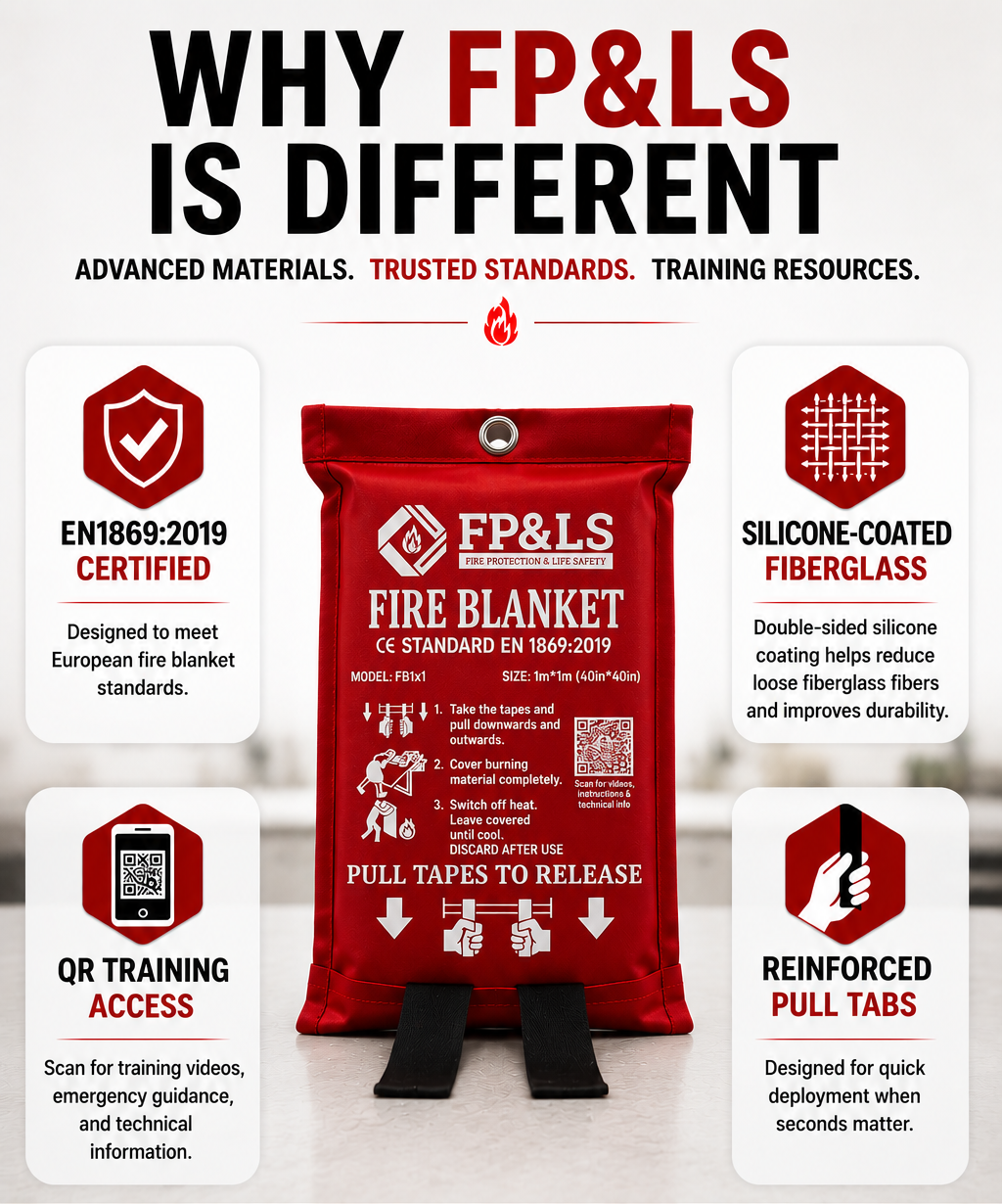
The best option is to use a high-quality fire blanket with high-grade fiberglass that includes a silicone coating.
The silicone coating not only prevents itching but also acts as a barrier against acid mist (hydrofluoric acid) generated in fires involving modern technologies, where other coatings may fail.
- Why Does Fiberglass Cause Itching?
Itching is not chemical, but mechanical:
- Microscopic filaments fracture
- They embed in the skin
- They cause micro-irritation
- The finer and more fragile the fiber, the greater the irritation
How to determine if your fire blanket is of good or poor quality
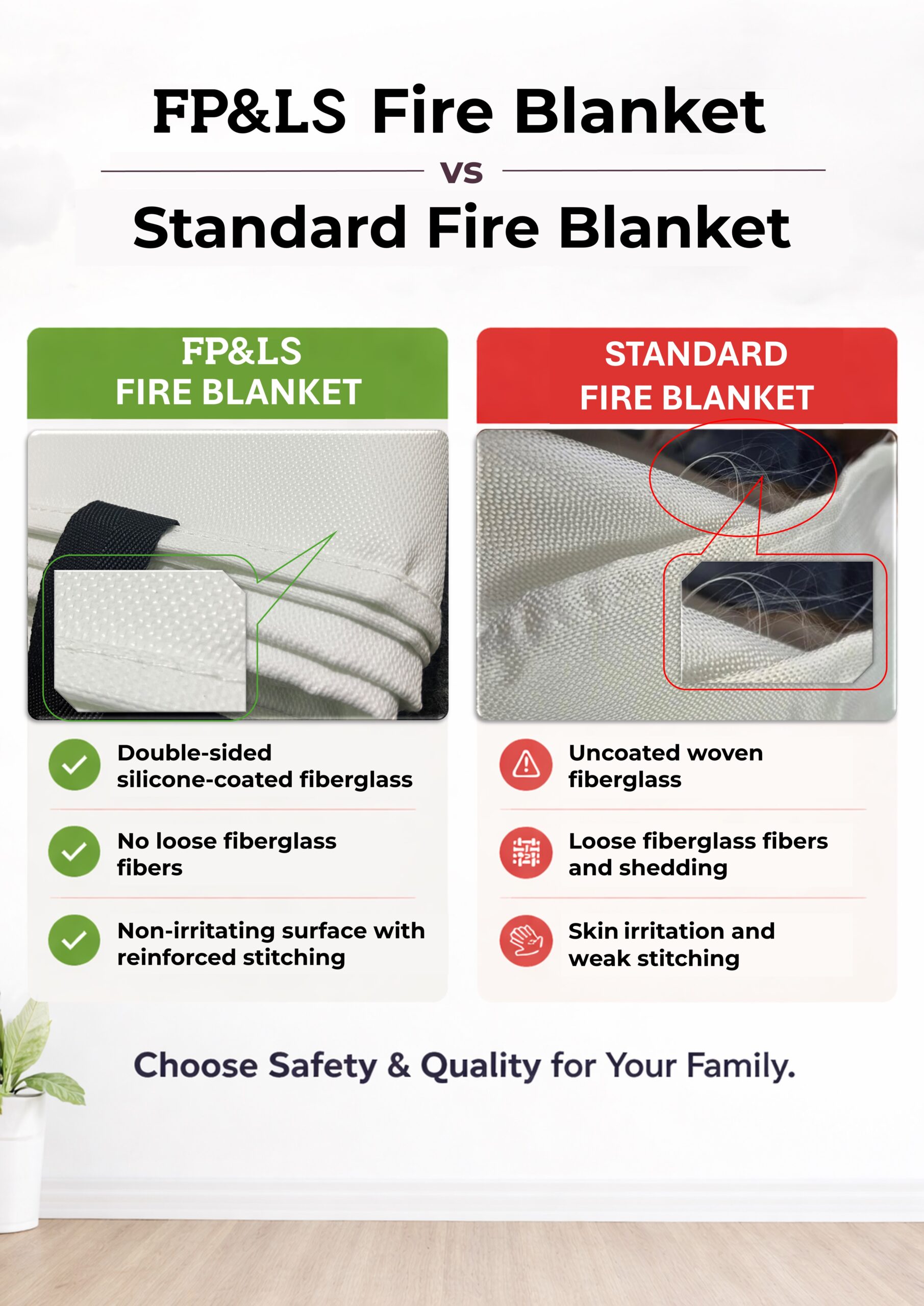
If, upon opening the package, you observe white dust or small loose filaments, exercise extreme caution, as this type of fire blanket can cause significant irritation, since these small fragments of fiberglass can become embedded in the skin and clothing.
If you observe fiberglass strands detaching from the blanket resembling long hairs, typically along the folds, you can be reassured, as this indicates that the fiberglass has undergone some type of treatment, and these strands are generally harmless.
If the blanket does not release white dust or small fiberglass filaments in the form of hair-like strands, this is an indication that the blanket is of very high quality and most likely features a silicone coating.
- White dust or loose fibers → low quality
- Long fiber strands → treated fiberglass
- No particles → high-quality silicone-coated blanket
Periodic Inspection Instructions
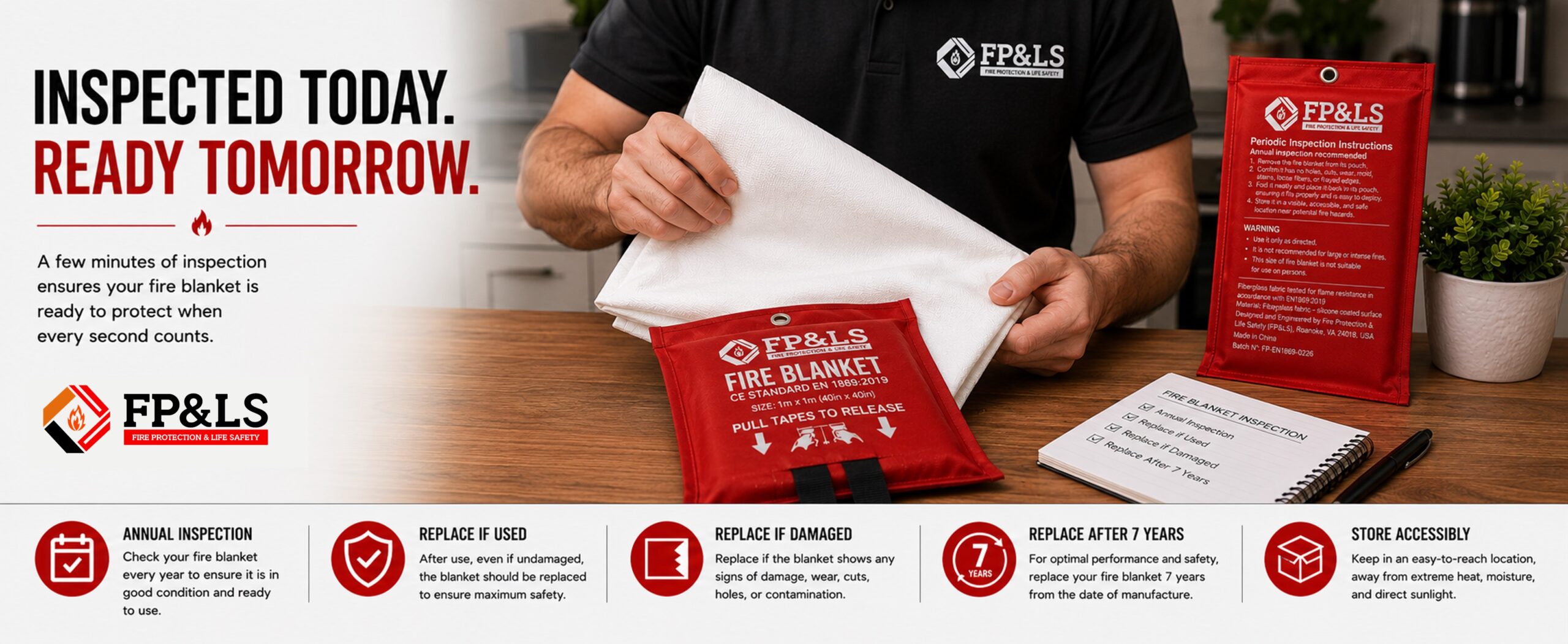
Annual inspection recommended:
*Remove the fire blanket from its pouch
*Check for cracks or damage in the pouch, discoloration, and ensure that the pictograms and instruction text are legible.
*Perform a visual inspection
- Confirm that the blanket has no holes, cuts, or worn areas.
- Verify that the surface is clean and free of mold or stains.
- Check that there are no loose fibers or frayed edges.
*After the inspection fold it neatly and place it back in its pouch, ensuring it fits properly and is easy to deploy.
*Position the blanket for quick Access
- Install or store it in a visible, accessible, and safe location, ideally near potential fire hazards and at a height reachable by any user.
The Fire Industry Association (FIA) recommends inspecting the blanket annually and replacing it every 7 years from the date of purchase, even if it has not been used, to ensure flexibility and the integrity of the packaging.
End of Service Life
Even if the fire blanket has not been used, it must be removed and replaced if any of the following conditions are present:
- Visible damage: cuts, tears, holes, or frayed edges that compromise the integrity of the material
- Contamination: presence of dirt, grease, chemicals, or mold that may affect deployment or fire resistance
- Prolonged exposure: the blanket has been exposed to direct sunlight, moisture, or extreme heat that may degrade the fiberglass or its coating
- Excessive loose fibers: abnormal fiber shedding when handled, beyond what is expected at folds (indicates degradation of treatment or fiber damage)
⚠ Note: These criteria allow the blanket to be removed before use, ensuring it will function properly and protect users.
Reusability
Why should fire blankets not be reused?
The EN 1869:2019 standard states in the Scope:
“This document specifies requirements for fire blankets which are not reusable and that are intended for use by one person.”
The reason a fire blanket should not be reused after being used to extinguish a fire is clear: any material subjected to a certain temperature loses its fire-resistance properties. As a result, in a future fire exposure, it may not perform the same way or may fail to smother the fire. In the worst case, the fiber may become so weakened that the fire could penetrate or consume the fire blanket material.
The thermal degradation of fiberglass is not always visible to the naked eye, but its tensile strength drops significantly after exposure to high temperatures. For this reason, a fire blanket must not be reused even if it appears to be in good condition.
Size and Use on People
Why should a 40 in × 40 in fire blanket not be used on people?
The EN 1869:2019 standard states in section 4.6:
“Fire blankets shall be rectangular or square and no edge shall be less than 1.0 m and no more than 1.8 m. Only fire blankets of minimum size 1.2 m × 1.8 m are considered suitable for smothering persons whose clothes are on fire.”
The reason a 40 in × 40 in blanket should not be used is simply due to its size, as it is too small to adequately cover a person.
Warnings
- Fire blankets must not be used on large fires
- Fire blankets must not be used on fires involving pressurized gas
- Do not throw, toss, or cast the fire blanket onto the fire, as this may supply additional oxygen or spread the fire to other surfaces. The correct method is to cover the fire surface with the blanket
- Never apply water to fires involving cooking oils or flammable liquids
- Fire blankets do not replace fire extinguishers, as their size does not allow them to cover large surfaces such as furniture, washing machines, etc.
⚠ If the fire is spreading, producing heavy smoke, or you feel unsafe:
EVACUATE IMMEDIATELY AND CALL 911
Proper Use
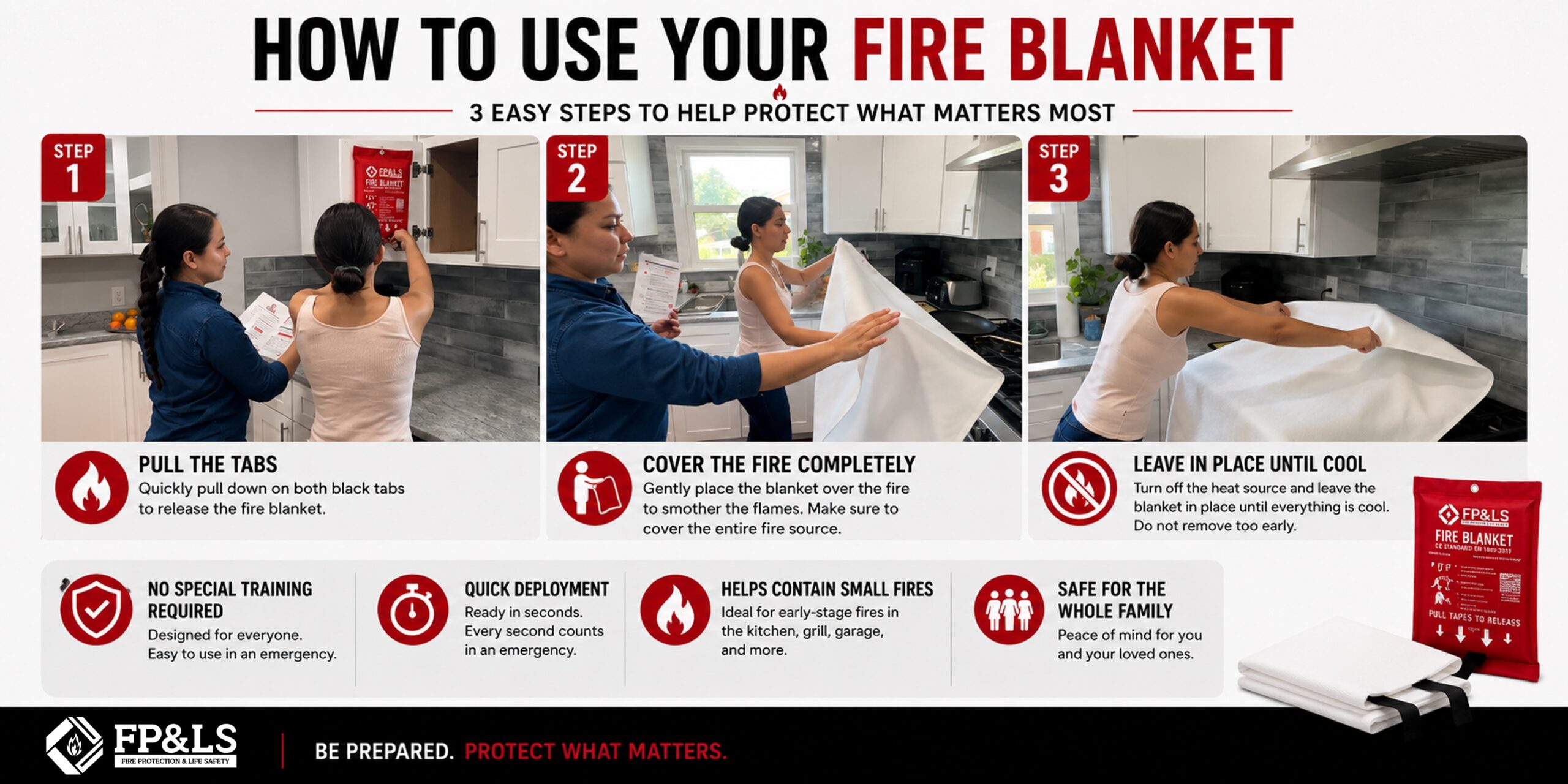
Safe step-by-step use
- Turn off the heat source if it is safe to do so
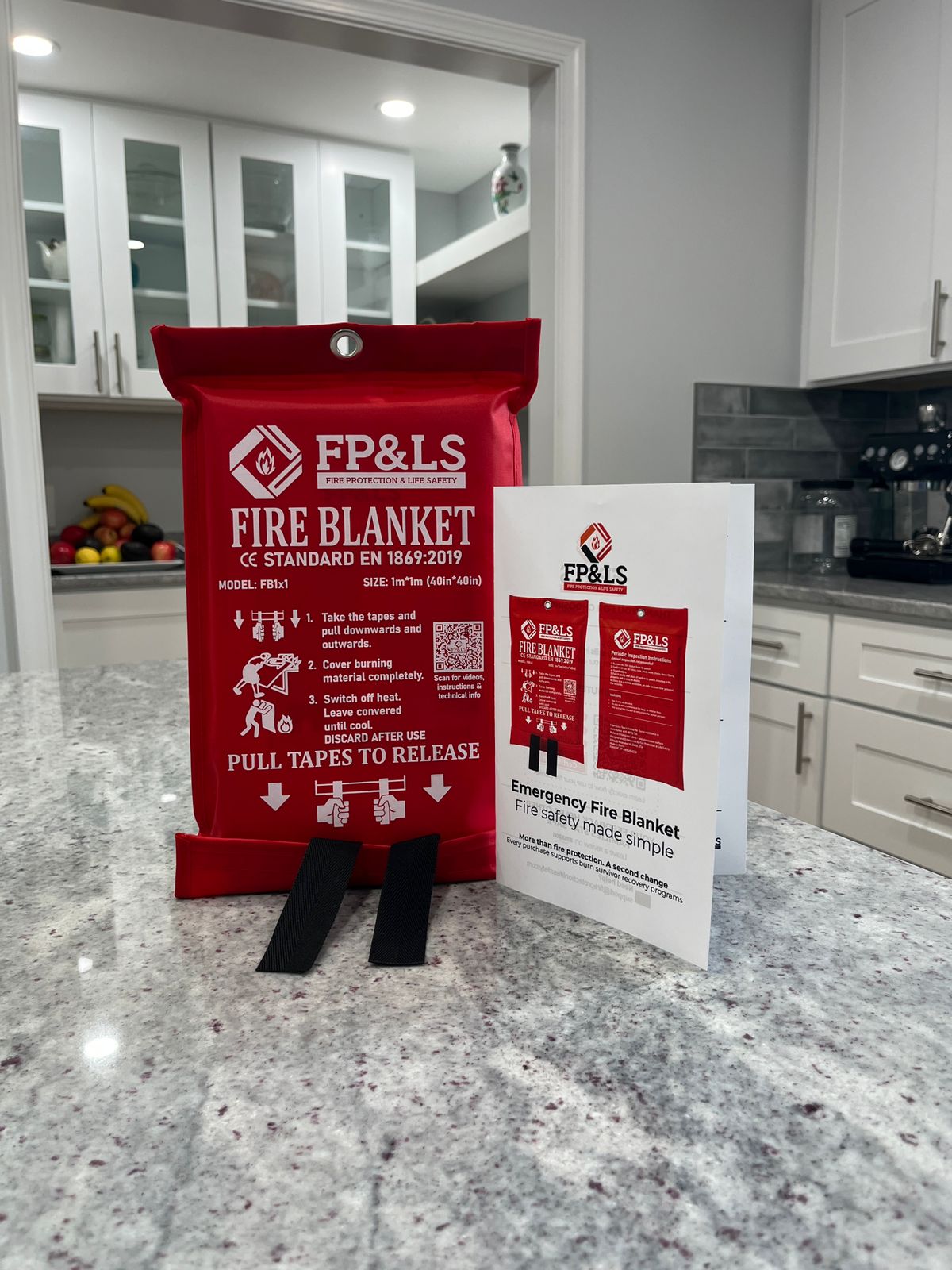
- Pull the tabs to deploy the blanket
- Hold the blanket in front of you to protect your hands
- Gently place it over the fire (do not throw it)
- Turn off the heat source if it was not possible in step 1
- Leave it in place for at least 20 minutes (or until the area is cool to the touch) to ensure heat dissipation and prevent re-ignition; Class B and Class K fires involve fuels with very high autoignition temperatures that require prolonged cooling
- DO NOT re-ignite the fire or touch the area immediately
Fire Classes – Limits of Use
This fire blanket is designed for the control and suppression of fires in the incipient stage, and its use is suitable only under the following fire classes and conditions:
- Class A (limited use)
Solid combustible materials such as paper, cardboard, fabrics, or wood, provided the fire is small, localized, and in its initial stage.
- Class B (small fires)
Flammable liquids such as gasoline, alcohol, paints, varnishes, and solvents, provided the liquid is contained in a small container (e.g., a jar or workshop tray).
In flammable liquid fires (Class B), such as gasoline or heptane, the fuel can reach autoignition temperatures between 220°C and 280°C (430°F – 536°F). If the blanket is removed before the liquid drops below this threshold, accumulated vapors may reignite upon contact with oxygen in the air.
⚠ Never apply water to this type of fire.
- Class C (In case of unintended use)
The fire blanket limits the risk of electric shock in case of unintended use on energized electrical equipment. It may be used on energized equipment without significant risk of shock, in accordance with EN 1869:2019.
The fire blanket is non-conductive, which reduces risk in accidental contact; however, it is NOT a certified electrical insulating device.
Power should always be disconnected whenever possible.
The blanket is not an extinguishing device for active electrical systems.
In accordance with EN 1869:2019, the blanket has been tested using a 500 V DC megohmmeter, ensuring a minimum resistance of 1 MΩ to reduce the risk of accidental electric shock.
- Class K (Fires in domestic and small kitchens)
Specifically intended for extinguishing incipient kitchen fires; it does not replace specialized suppression systems used in commercial kitchens.
In vegetable oil fires (Class K), the fuel may exceed 360°C (680°F) and can cause re-ignition if the blanket is removed prematurely.
⚠ Never apply water to this type of fire.
- Important limitations
- Not suitable for Class D fires (combustible metals)
- Not suitable for industrial Class K fires
- Not designed for large, developed, or uncontrolled fires
- Not suitable for extinguishing internal lithium battery fires (EV); in such cases, the blanket only helps contain external flames and protect the surrounding area
Compliance with these fire class limitations ensures that the fire blanket is used safely and effectively; always follow the instructions for use and warnings provided in this document.
Application on Objects and People
This fire blanket can be effectively used on both fire sources and people, but each case has specific conditions:
- Use on objects
- Extinguishing small fires on objects, surfaces, or combustible materials
- Technique: carefully cover the fire without throwing the blanket
- Risk: low if instructions are followed
- Examples: domestic kitchens, garages, workshops, laboratories, camping
Note: do not reuse the blanket after this use
- Use on people
- Only for clothing fires and always with properly sized blankets (minimum 1.2 m × 1.8 m)
- Technique: wrap the person with the blanket to smother the flames, protect the head, and keep airways clear
- Risk: high if a blanket that is too small is used or if applied incorrectly
Note: do not reuse the blanket after this use
Criteria for Abandoning the Fire
Although the fire blanket is designed for incipient fires, you must immediately abandon the area if any of the following conditions occur:
- The fire can no longer be controlled with the blanket or spreads rapidly
- Thermal protective clothing or self-contained breathing apparatus (SCBA) is required to approach the fire
- The fire produces dense smoke or heat that prevents safe proximity (visual observation)
⚠ Note: These criteria are based on the definition of a “fire beyond the incipient stage” in NFPA 600 A.3.20 and allow safe decision-making without requiring precise measurements.
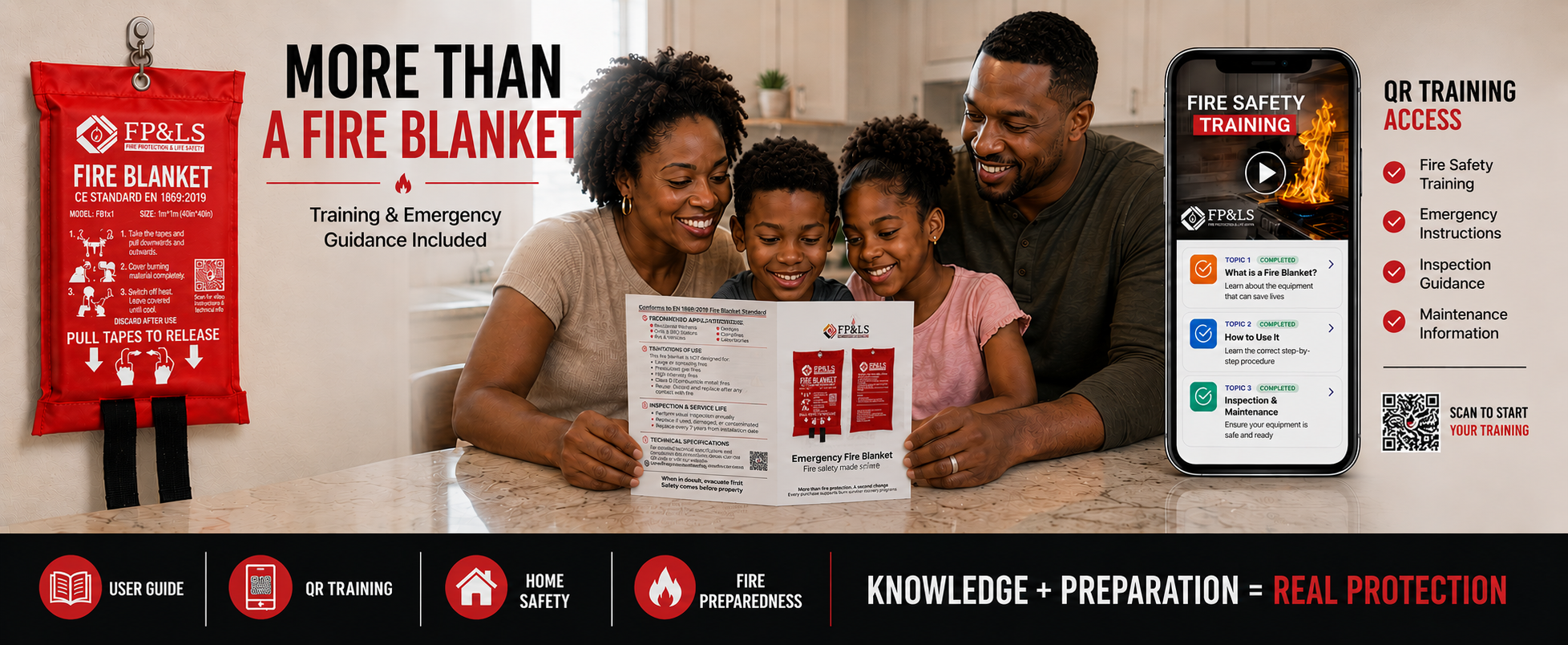
Family Training
It is recommended to practice and teach the correct use of the fire blanket with all family members.
Why should all family members be trained?
- It has been demonstrated that in emergency situations, prepared individuals have a higher likelihood of responding correctly and safely. Just as evacuation drills are practiced at home, school, or work, and CPR training is conducted, the same approach should be applied to fire blankets, with at least one practice drill per year.
- Muscle memory is a determining factor in survival during fires
⚠ NOTE: These drills must never involve real fire. Only the procedure should be followed without generating any fire or using hazardous materials that could endanger health, life, or the integrity of the fire blanket.
- Education and Certification
It is important to distinguish between educational practice and formal certification:
- Education / family training: consists of teaching and practicing the proper use of the fire blanket at home, in the kitchen, garage, or camping, following safety procedures and drills without real fire. This training prepares users to act correctly in an emergency.
- Formal certification: no domestic practice replaces official fire suppression certification, professional CPR courses, or training regulated by competent authorities.
Proper use of the fire blanket does not require formal certification.
Recommended Placement
Where should a fire blanket be located?
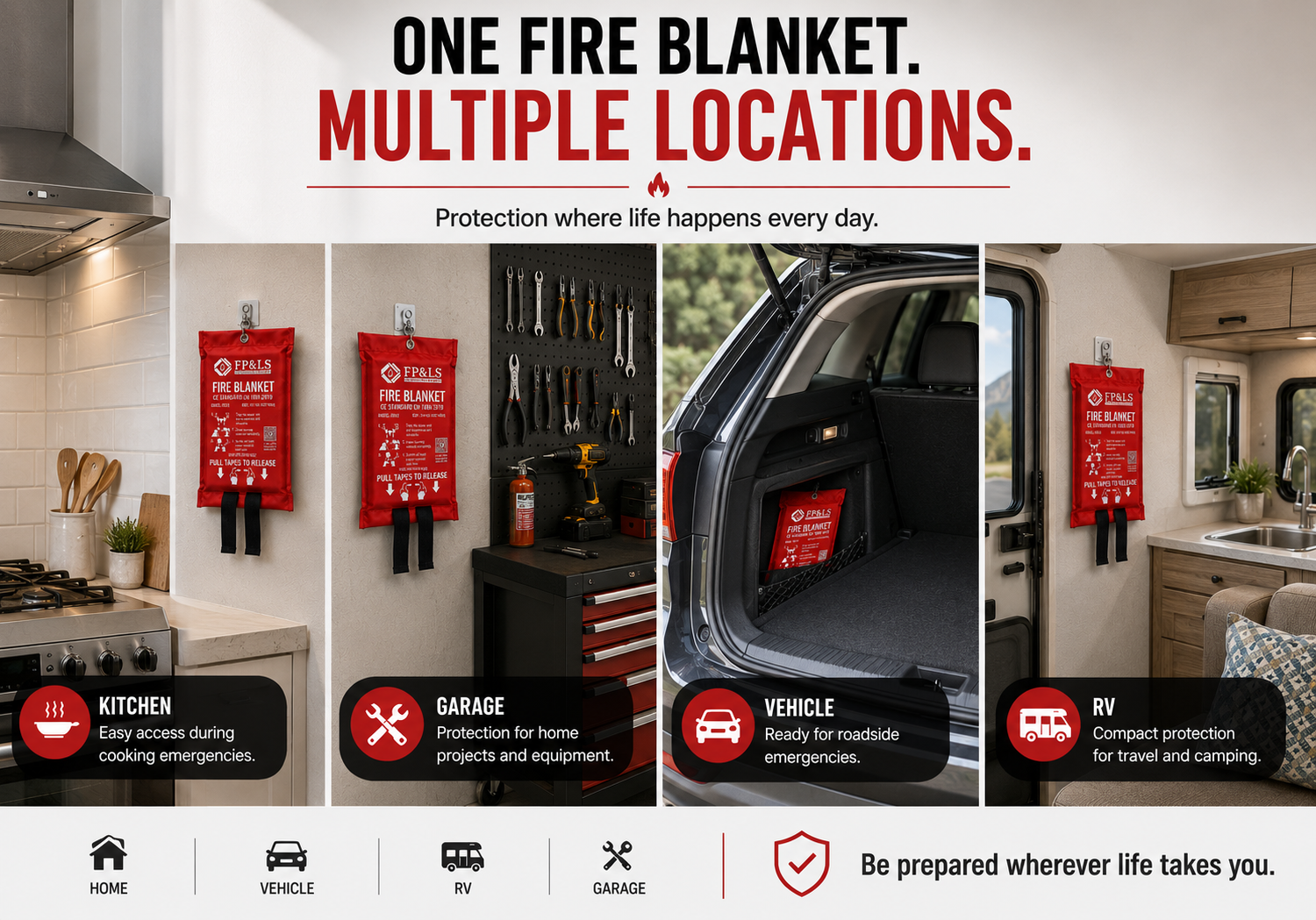
It is recommended to place a fire blanket in the following locations:
- Kitchen
- Hung on a wall, door, or refrigerator (but never directly above the hazard area)
- Stored in an easily accessible drawer where it is the first item available
- Garage
- BBQ area or near the grill
- Vehicle
- RV
- Inside a camping backpack
- On a wall in a laboratory or workshop
Common Mistakes
❌ Throwing the blanket
❌ Removing it too early
❌ Using it on large fires
❌ Believing it can be cleaned and reused after a fire — this practice is extremely dangerous and can put your life at risk in a future incident